AI: an essential tool in today’s workplace?
Artificial intelligence is becoming increasingly present in companies.
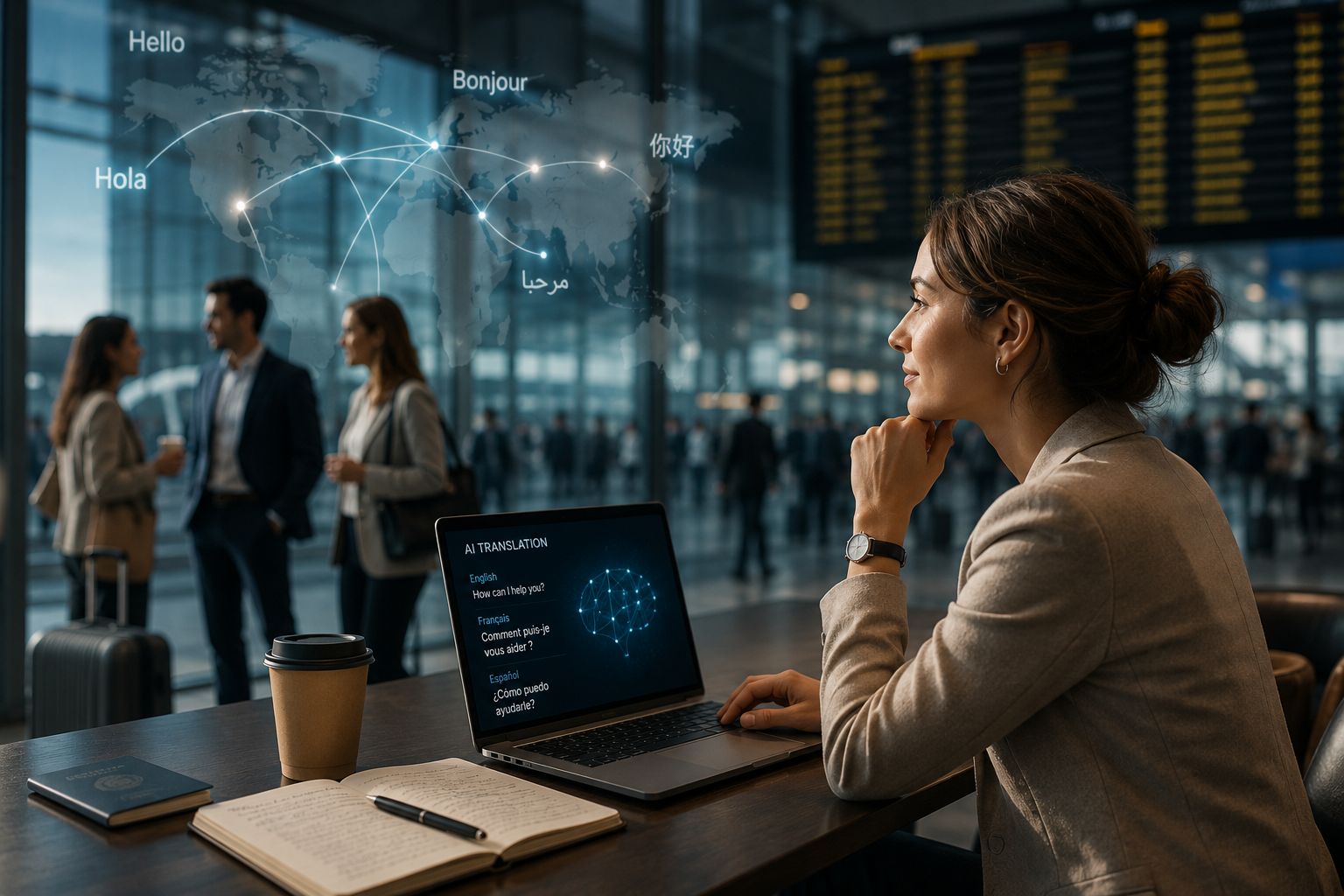
Instant translations, content generation, task automation, writing assistance or meeting preparation: these tools are evolving rapidly and are already transforming daily professional life.
In the field of languages as well, AI has become a useful resource. It helps save time, access information more easily and support certain professional tasks on a daily basis.
But can technology really handle everything?
Despite these advances, one reality remains essential: human relationships cannot be reduced to automatic translation.
In international environments, companies are looking for much more than employees who simply understand a language.
They need people who can communicate with nuance, collaborate within multicultural teams, handle complex situations and build trust.
Why do human skills remain so important?
International leadership also relies on human abilities: listening, adapting communication styles, understanding cultural codes, managing sensitive conversations and bringing teams together in hybrid and international environments.
And this is precisely where artificial intelligence shows its limits.
An important meeting, a negotiation, an informal discussion with an international team or speaking in front of clients require far more than a technically correct translation.
Spontaneity, emotion, cultural sensitivity and the quality of human connection remain deeply human.
Is learning a language still necessary in the age of AI?
Today, learning a language is no longer just about acquiring vocabulary or grammar.
It is about developing the ability to interact, collaborate and evolve confidently in an increasingly complex international environment.
AI can support learning and become a valuable complementary tool. But it cannot replace emotional intelligence, intercultural communication or the ability to create genuine human connection.
What if real added value becomes what cannot be automated?
As artificial intelligence continues to progress every day, an important question deserves to be asked: will the true strength of companies lie precisely in what technology cannot reproduce?
Understanding others, communicating with nuance, building trust and creating human relationships remain essential skills.
Because beyond the tools and technology, it is still human interaction that moves projects, teams and companies forward.